









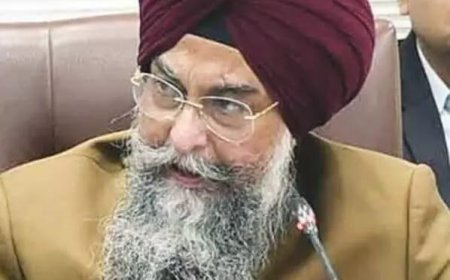





















Vice Chancellor PAU S.S.Gosal's tenure ends on a high note, faculty hails his contribution

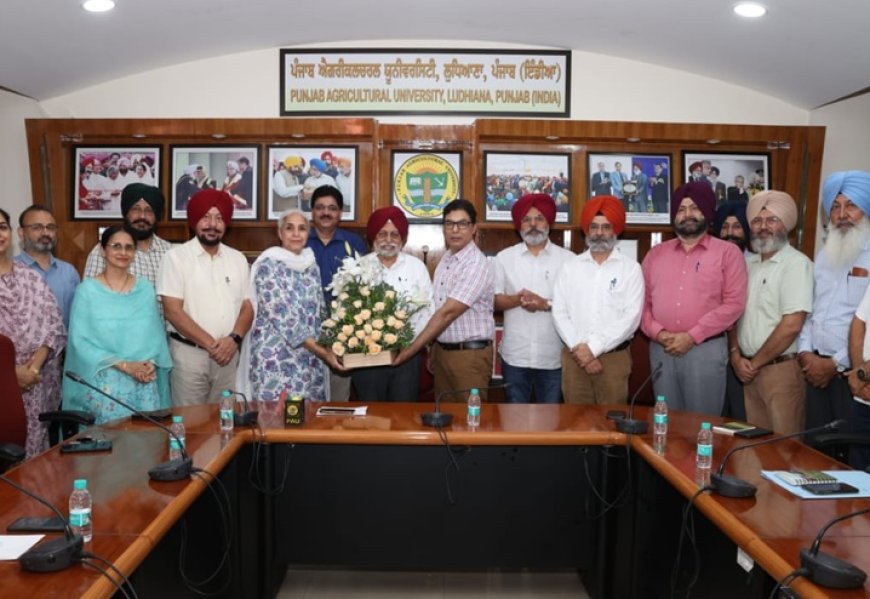
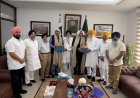
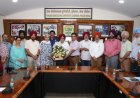
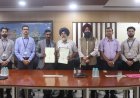
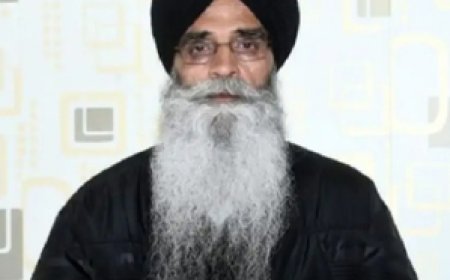
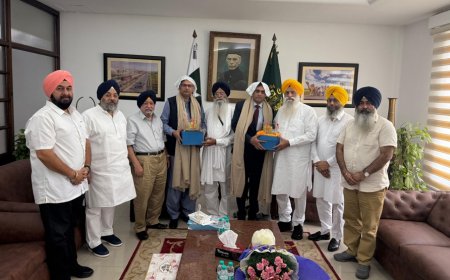
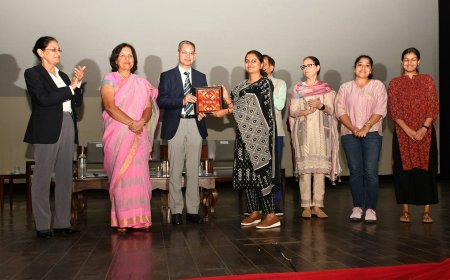
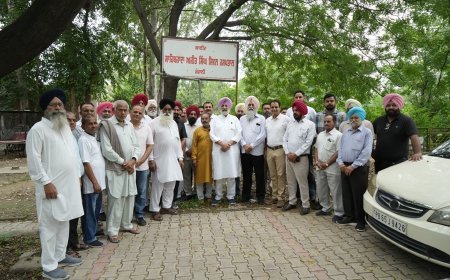
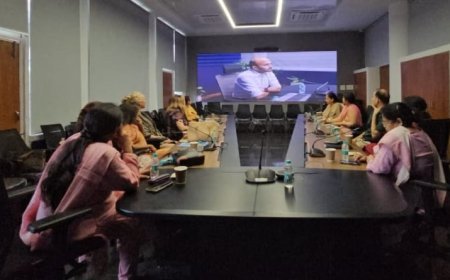
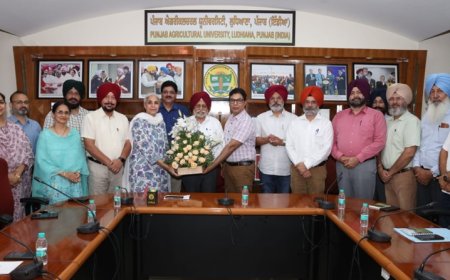
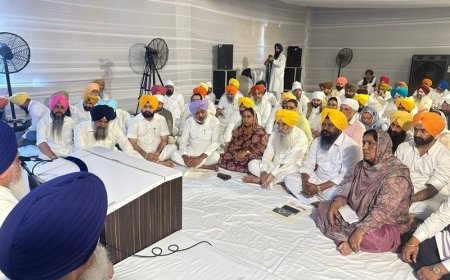
LUDHIANA: As the four-year tenure of Dr Satbir Singh Gosal as Vice Chancellor of Punjab Agricultural University (PAU), Ludhiana, draws to a close on August 18, the University witnessed a series of warm and deeply appreciative farewell meetings that brought together the institution’s officers, faculty and employee unions and the Vice Chancellor’s personal office team. Across the three interactions, gratitude, affection and recognition of a shared journey came to the fore, marking the culmination of a tenure defined by academic advancement, research-led growth, institutional strengthening and a renewed sense of pride in PAU.
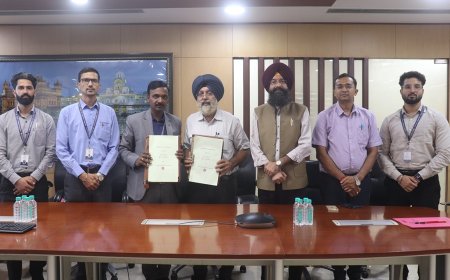
The first meeting with the University officers provided an opportunity to reflect on the collective responsibilities shouldered during the past four years. The second brought together representatives of the faculty, non-teaching staff and Class IV employees, creating a broad platform for the PAU fraternity to acknowledge the leadership and accessibility of the outgoing Vice Chancellor. The third meeting with his personal office staff was particularly personal in its tone, recognising the team that worked closely with him through the demands of his tenure.
Taking the opportunity to express his gratitude, Dr Gosal acknowledged the cooperation, commitment and goodwill extended by the University community throughout his tenure. He conveyed his appreciation to officers, teachers, scientists, non-teaching employees, supporting staff and members of his personal office for their contribution to the institution’s progress. The journey, he emphasised, had been a collective endeavour in which every section of PAU had a role to play. The goodwill received from colleagues and employees remained among the most valued memories of his tenure.
An accomplished agricultural biotechnologist, Dr Gosal assumed charge as Vice Chancellor on August 19, 2022. His academic and research career includes a B.Sc. from Panjab University, Chandigarh, and M.Sc. and Ph.D. in Plant Breeding from PAU, followed by postdoctoral research at the University of Nottingham and John Innes Centre, Norwich. He has also undertaken advanced training in biosafety of genetically modified crops in the United States. Before becoming Vice Chancellor, he served PAU in several important capacities, including Director of Research, Additional Director Research, Founder Director of the School of Agricultural Biotechnology and Head of the Department of Biotechnology.
His credentials extend well beyond the University. They include the Royal Society London’s Bursary, Rockefeller Foundation Career Fellowships, a Lifetime Achievement Award from the Punjab Academy of Sciences and the presidency of the Academy. He has served as a consultant to FAO/IAEA, an honorary member of the Australian Research Council Board of Assessors and a member of the Review Committee on Genetic Manipulation of the Department of Biotechnology, Government of India. His research record includes 20 externally funded projects, 207 research papers in refereed journals, 12 books and guidance of 77 postgraduate students.
Under his leadership, PAU retained the top position among 75 agricultural universities in the country in the NIRF rankings for 2023, 2024 and 2025. The University also entered the list of the world’s top 100 agricultural universities and received the Academic Leadership Award 2026 at the 17th Agriculture Leadership Conclave. ICAR accredited PAU with an A+ grade, while its inclusion in the BRICS Network of Universities opened new possibilities for international academic collaboration. During the tenure, approximate 442 permanent employees were appointed and 23 Honorary Visiting Professors from India and abroad were associated with the University.
The tenure also witnessed substantial expansion of infrastructure and institutional capacity. A special capital grant of Rs 30 crore annually was secured from the Punjab Government for upgrading basic infrastructure and research facilities. The funding supported improvements ranging from student facilities, laboratories, hostels and the University Library to agricultural machinery, seed farms, the Gene Bank and other academic and research infrastructure. Fifty new tractors and agricultural machinery were purchased in one go, while the Clean and Green Drive transformed the Student’s Home area into a more vibrant campus space with a walking zone, landscaping, open-air theatre and modern cafeterias.
Research and agricultural innovation remained central to the tenure. PAU established a Speed Breeding Facility, Technology Park and Pilot Training Centre for Drones, while demonstrating technologies such as auto-steering tractors, remote-controlled paddy transplanters, drones and sensor-based irrigation. Sixty-five new crop varieties and hybrids were recommended for Punjab, with wheat varieties PBW 826 and PBW 872 being recognised by ICAR among the best wheat varieties in the country. Seed production of recommended varieties increased from 45,000 quintals in 2022-23 to 72,000 quintals in 2024-25.
Greater global engagement and farmer outreach added another dimension to the tenure. Collaborations were strengthened with universities and institutions in the United States, Canada, Argentina and elsewhere, alongside linkages with the World Bank. PAU organised Sarkar-Kisan Milnis and, for the first time, brought NRI progressive farmers together with farmers of Punjab. Farmer communication was expanded through WhatsApp, Facebook, Instagram and e-Kheti Sandesh, while new alumni centres, a Media Centre and a daily agricultural broadcast linkage with All India Radio, Ludhiana further widened the University’s public reach.
For the entire PAU fraternity, the farewell meetings were more than formal occasions. They reflected appreciation for a tenure in which institutional ambition was matched by visible action, and in which academic excellence, research, infrastructure, farmer service and human resource development moved forward together. The fraternity acknowledged the outgoing Vice Chancellor’s accessibility, encouragement and faith in collective effort, while expressing gratitude for the opportunities created during his leadership. The meetings also conveyed the hope that the values of scholarship, service and innovation strengthened during these four years would continue to guide PAU’s journey.
As Dr Gosal’s tenure comes to an end, PAU bids farewell not merely to its Vice Chancellor, but to a scientist-leader whose four years have left a visible imprint on the University’s academic standing, research ecosystem, physical landscape and engagement with society. The farewell was warm because the legacy is tangible, and the gratitude deep because the journey was shared.
What's Your Reaction?
 Like
0
Like
0
 Dislike
0
Dislike
0
 Love
0
Love
0
 Funny
0
Funny
0
 Angry
0
Angry
0
 Sad
0
Sad
0
 Wow
0
Wow
0