































Sacrifices for Power: The endless plight of dam oustees

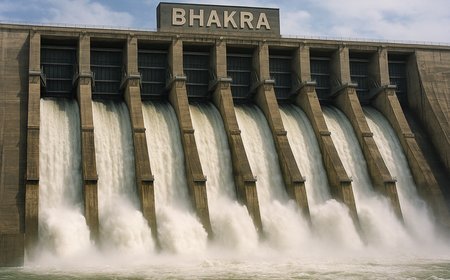
CHANDIGARH: Chandigarh--Decades after displacement, Bhakra and Pong Dam oustees still struggle for justice, alternate land and proper rehabilitation. Despite foundational national sacrifices made for the dam, thousands of families continue to face unresolved grievances, land allotments issues, and systemic administrative delays.
As the state government has now prepared a new proposal, under which a plan has been made to buy private land and give plots to the displaced people. Earlier, 256 Bigha land of Changar Palasin near AIIMS was selected but it was not found suitable. After this, government land near Gwalthai was considered, but the matter did not work out there either.
Now the administration has sent a proposal to the state government to purchase private land. As soon as the approval is received, this scheme will be implemented and the displaced people who have been waiting for plots for decades are likely to get their rights. The state government’s action again brings issue to the fore.
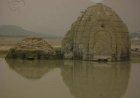
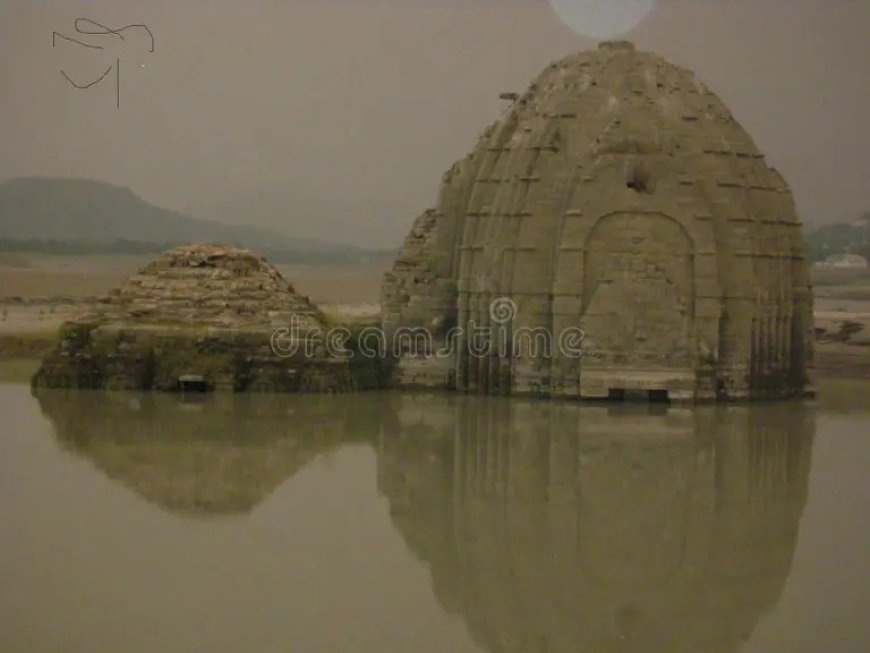
Many families displaced by the reservoir have spent decades fighting for promised alternate agricultural and residential plots. According to the official records, around 11,777 families of 376 villages were rendered homeless and 118 ancient temples were submerged in the waters of Gobind Sagar Lake just to illuminate the country. The Bhakra Dam Oustees Association (Regd) Fatehbad, Haryana, stated that around 2836 families of 376 villages from the district of Bilaspur, Una, Mandi, Solan were uprooted due to the Bhakra Dam. They were given 16 marla land for house each and some land for cultivation in 13 villages of Sirsa, 15 villages of Fatehbad and one village of Hisar. But these oustees could not adjust themselves in the changed environment.
Loss of Heritage and Livelihood: The submergence of old Bilaspur and surrounding tracts erased historical roots, leaving oustees to cope with lingering socio-economic hardships.
Slow Rehabilitation Implementation: The Petition Committee of Lok Sabha in 1979 recommended the setting up of the National Fund for the Rehabilitation of the oustees of the Bhakra Dam. The All India Himachal Social Bodies Federation took up this matter with the ministry concerned in 2011. A number of meetings were held with the Chairman of BBMB but nothing came of these. Relief packages and comprehensive rehabilitation frameworks have faced severe execution lags and administrative bottlenecks. Even the oustees have been deprived of their reservation right in the Dogra Regiment as applicable to the bona fide Himachalis. “Shamlat land” of their villages was acquired by the government and the compensation for these lands has not been given to the oustees. It is also alleged that some un-scrupulous people have grabbed the land of these oustees in their villages. All these years a number of representations have been sent to rehabilitation office but to no avail, alleged the association.
Some experts say that in Himachal Pradesh with 400 small dams allotted and 600 in the offing. Ongoing Political Assurances: State leaders periodically visit and promise speedy resolutions, but tangible, on-the-ground closure remains slow for aging survivors and their descendants. Today the new Bilaspur city may have been settled but the pain and struggle of the displaced people has not ended even today. Pt. Jawaharlal Nehru while addressing the oustees of Hirakund Dam said, “If you are to suffer, you should suffer in the interest of the nation.” How true these words are even today.
Sardari Lal Sharma, general secretary of Bhakra Dam Oustees Association, Fatehabad in 2012 dislcosed that an agreement was signed between the Raja of Bilalspur Anand Chand and the Punjab Irrigation Chief Engineer Swaroop Singh on behalf of Punjab government on February 2, 1948 and revised in July 1948. But contents of the Agreement have not been disclosed to the public for the past more than 65 years. He further stated that around 41,600 acres of land was acquired for the xtorage of 78 million cubic feet water when the Bhakra Dam was constructed. After 65 years of its completion the oustees of the Bhakra Dam and more so of the Pong Dam on the Beas River in Himachal Pradesh are yet to be rehabilitated.
Even today senior citizens get emotional remembering the old city. He explains that this city, established by Raja Dalip Chand of the princely state of Kahlur, was not just a structure of bricks and stones, but an entire culture resided in its streets, squares, temples and fresh water sources. The palace of Dholra, the wells of Chamdu, the sweet waters of Panchrukhi, and the rare paintings of Gopal Temple, all were lost in the depths of the lake.
Let us tell you that when the country's first Prime Minister Pt. Jawaharlal Nehru had called Bhakra Dam the modern temple of the country, he had also promised that so many facilities would be provided to the displaced people that they would forget their pain. But this promise remained just an assurance. The displaced people were not properly rehabilitated, and they did not even get the ownership rights of the lands on which they took refuge.
At the same time, Pandit Jaikumar Sharma, General Secretary of All-Party Bhakra Displaced and Affected Committee and Deshraj Sharma, President of Rural Bhakra Displaced Reform Committee, say that the displaced people had to be victims of political neglect every time. If the old city had existed today, its rich culture and heritage would have been visible in a different form.
Late MLA Pandit Deenanath has also given a poignant portrayal of that painful moment in his famous poem 'The evening of 9th August'. One can see mounting evidence of the harm done to the people of the state. While other states benefit at the cost of Himachal Pradesh’s environment, forest wealth and displacement of thousands of people and rich heritage
What's Your Reaction?
 Like
0
Like
0
 Dislike
0
Dislike
0
 Love
0
Love
0
 Funny
0
Funny
0
 Angry
0
Angry
0
 Sad
0
Sad
0
 Wow
0
Wow
0