












































Rajasthan High Court Dismisses Petitions Challenging Proposed Demolition of Religious Sites
The Rajasthan High Court has dismissed a batch of petitions challenging notices issued for the proposed eviction, vacation and possible demolition of mosques, madrasas and dargahs located within about 50 kilometres of the India-Pakistan border, holding that national security considerations must prevail in such sensitive matters.

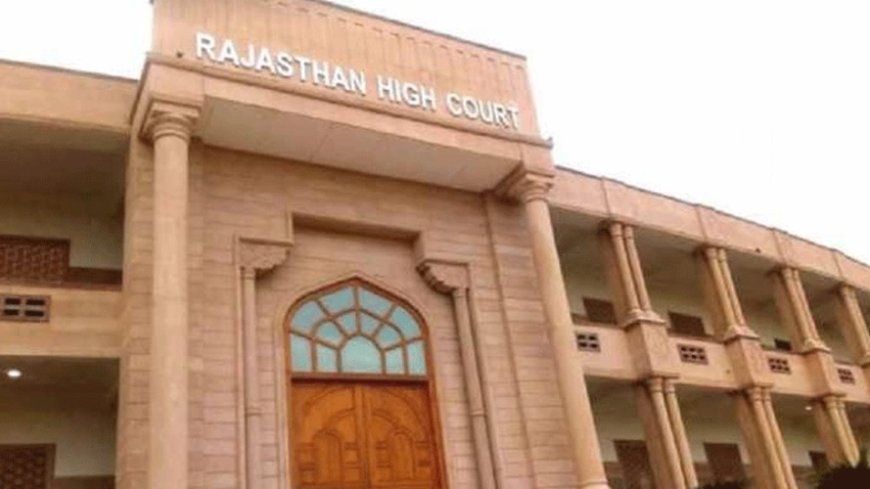
JAIPUR: The Rajasthan High Court has dismissed a batch of petitions challenging notices issued for the proposed eviction, vacation and possible demolition of mosques, madrasas and dargahs located within about 50 kilometres of the India-Pakistan border, holding that national security considerations must prevail in such sensitive matters.
The judgment was delivered on July 13, 2026, by Justice Sameer Jain in Peer Mohammad Shah Jilani Dargah Samiti v. State of Rajasthan in S.B. Civil Writ Petition No. 13243/2026, Neutral Citation No. 2026:RJ-JP:30648. The court treated that petition as the lead matter and applied its findings to all connected cases.
The petitions had challenged eviction, vacation and show-cause notices issued under the Rajasthan Land Revenue Act, 1956, the Rajasthan Colonization Act, 1954 and related rules governing Gram Panchayats. The petitioners argued that the notices were arbitrary and targeted religious structures. They also claimed that the proposed action amounted to discrimination and violated constitutional protections.
The State, however, maintained that the structures were situated in a highly sensitive border zone and had allegedly been raised without valid permission or authorization. According to the respondents, the properties were in unauthorized occupation of government or agricultural land and had been established without lawful conversion or sanction. The authorities further submitted that intelligence inputs and complaints suggested that such structures could pose a threat to national security.
After examining the pleadings and the material placed on record, the High Court found that the petitions suffered from serious deficiencies, including questions over locus standi and the absence of proper authorization or documentary proof showing that the petitioners were legally entitled to represent the concerned religious institutions. The court noted that in most cases, no credible resolutions, documents or records from any recognized body had been produced.
Justice Jain also held that the precedents cited by the petitioners were distinguishable. The court observed that those cases dealt with demolition in entirely different contexts, such as forest encroachments or action against criminals and convicts, whereas the present matter involved properties located near an international border and raised issues of national security. Since no demolition had yet taken place and only notices had been issued, the court said the petitioners could not equate the present case with cases involving completed coercive action.
The court further held that in matters involving national security, strict adherence to the traditional rigours of natural justice is not always required. It said a pragmatic and situation-responsive approach is permissible, provided there is material justifying the action. In the present case, the court found that procedural compliance had been made and that no prejudice had been caused to the petitioners, who had themselves not participated in the process.
Dismissing the petitions, the court also issued important directions for future cases involving sensitive properties near the border. It ordered the constitution of a committee comprising the District Collector, Superintendent of Police and a representative of the Border Security Force to examine such matters on a case-by-case basis. The committee may consider intelligence inputs, evidence and ground realities, and may take appropriate action, including eviction, dispossession or demolition, if warranted.
The High Court’s ruling underscores that while natural justice remains important, it may be tailored in exceptional cases where national security is at stake.
What's Your Reaction?
 Like
0
Like
0
 Dislike
0
Dislike
0
 Love
0
Love
0
 Funny
0
Funny
0
 Angry
0
Angry
0
 Sad
0
Sad
0
 Wow
0
Wow
0