







































City Beautiful shines bright with full Solar Government coverage

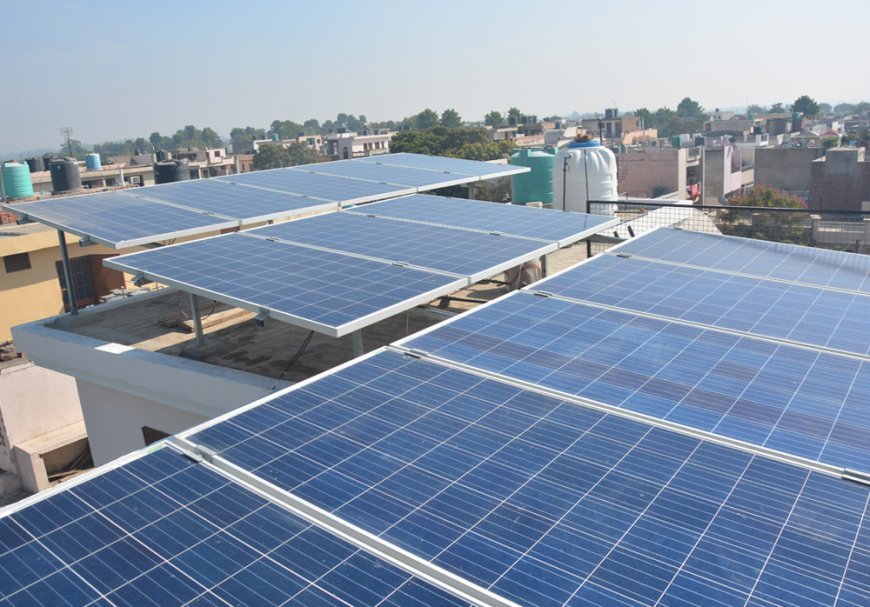
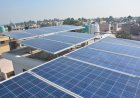
CHANDIGARH: City Beautiful added another feather in its cap when it has achieved 100 per cent rooftop solar installation across all government buildings. It is also a significant milestone in its renewable energy journey. The official of the Administration told that with achievement of public sector target, the Administration is now focusing on accelerating rooftop solar adoption in private homes through awareness campaigns and incentives to expand clean energy generation and reduce carbon emissions. It reflects the Administration sustained efforts to promote renewable energy and demonstrate leadership in sustainable urban development. It not only will reduce electricity costs for public institutions but also increasing the share of renewable energy in the city’s overall power consumption.
Now the Administration is all set to make rooftop solar an increasingly attractive long term investment. Simplifying regulatory procedures and improving consumer awareness can significantly increase participation among residential consumers. It will further boost Chandigarh’s contribution to India’s renewable energy goals. Distributed solar generation helps reduce transmission losses, ease pressure on electricity grid during peak demand. With full rooftop solar coverage achieved on eligible government buildings, Chandigarh has established a strong foundation for the next phase of its renewable energy journey. By encouraging widespread adoption among private homeowners, the city aims to build a cleaner, more sustainable, and energy-efficient urban environment while serving as a model for other cities pursuing ambitious rooftop solar initiatives.
Over 6,300 eligible government buildings and administrative offices now feature operational solar arrays. A small fraction of buildings or government houses were bypassed specifically due to structural constraints, heavy tree shadows, or inadequate minimum sanctioned electricity loads. The rollout is spearheaded locally by the CREST (Chandigarh Renewal Energy and Science and Technology Promotion Society). Chandigarh has reached a total installed solar generation capacity of 103 MW, becoming the first Union Territory in India to achieve 100% rooftop solar saturation on all eligible government buildings and residential government houses.
• Government Buildings: Covers 6,366 buildings with a capacity of 67 MW, producing roughly 6,700 MWh (6.7 million units) of solar power every month.
• Private and Public Projects: The remaining capacity spans private residential rooftops, parking sheds, and floating solar power plants (such as the installation at Sector 39 waterworks) managed via CREST.
• Milestones: Total historical clean energy generation has surpassed 270 million units, cutting massive amounts of carbon dioxide emissions as the city targets model solar city status.
Public sector installations cut millions of rupees off monthly utility bills, making multiple municipal departments net-zero or self-sufficient. Attention has now shifted toward incentivizing private residential and commercial rooftops using national frameworks like the PM Surya Ghar portal.
A small fraction of buildings or government houses were bypassed specifically due to structural constraints, heavy tree shadows, or inadequate minimum sanctioned electricity loads.
What's Your Reaction?
 Like
0
Like
0
 Dislike
0
Dislike
0
 Love
0
Love
0
 Funny
0
Funny
0
 Angry
0
Angry
0
 Sad
0
Sad
0
 Wow
0
Wow
0