By Jag Mohan Thaken
The National Human Rights Commission (NHRC), India has taken suo motu cognizance of a media report that a Class 4 student was assaulted and subjected to casteist slurs by a teacher at a Government Primary School in Ukawal village, Shivpuri district, Madhya Pradesh on 28th July 2026. Reportedly, the teacher was enraged seeing the boy from a Dalit community drinking water from his bottle, as stated in a press release issued by PIB, a government press agency, on August 6,2026.
The PIB has further divulged that the Commission has observed that the contents of the news report, if true, raise serious issues of violation of human rights. Therefore, it has issued notices to Madhya Pradesh Chief Secretary and Shivpuri Superintendent of Police, calling for a detailed report on the matter within two weeks. It is expected to include the status of the statutory relief to the victim.
PIB added that according to the media report, carried on 1st August 2026, the boy narrated the incident to his parents, following which the matter was reported to the police.
Now questions arise: Why are Dalits being persecuted despite the existence of stringent laws? How do members of the upper strata continue to harbor an anti-Dalit mindset that has persisted for millennia; do they have absolutely no fear of the law? Do they believe they will face no punishment for such acts of oppression against Dalits? If they do feel this way, what is the reason behind it? Will the National Human Rights Commission be able to ensure that the guilty teacher in the case in question is brought to justice?
Even after thirty-seven years after the enactment of the Scheduled Castes and Scheduled Tribes (Prevention of Atrocities) Act, 1989, why are the fingers pointed towards its implementation that the promise of justice for Dalits and Adivasis remains deeply unfulfilled?
Why do such questions come to mind? Let us see an example quoted by Ashok Gehlot, a senior congress leader and a former Chief Minister of Rajasthan.
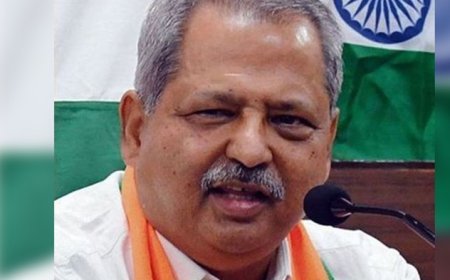
Raising questions over the system, Ashok Gehlot wrote on his X account @ashokgehlot51 on August 6, 2026, and reportedly quoted a murder case of six people, including five Dalits, wherein all the 40 accused got Scot free.
Gehlot wrote, “The verdict in the Dangawas massacre case of Nagaur, coming after 11 years, is highly concerning. In 2015, six people, including five Dalits, were brutally murdered over a land dispute, and now the Scheduled Castes and Scheduled Tribes (SC-ST) special court has acquitted all 40 accused, giving them the benefit of the doubt. The victims' families have a valid question: if all 40 accused have been acquitted, then who exactly murdered these six people?”
Gehlot adds, “Despite an 11-year-long legal battle, a CBI investigation, and the trial, the failure to deliver justice points to serious flaws in the investigation and prosecution. The fact that such an incident occurred 11 years ago under the BJP government's rule, and now an adverse verdict has come under their same regime, shows that the BJP is not on the side of justice. Accountability must be fixed for this injustice done to the Dalit community.”
Turning the issue towards a political angle, Gehlot advises, “The Congress has always stood firmly for the dignity and rights of the Dalit community. To ensure justice for the victims' families, the process of appealing this verdict in a higher court must be vigorously pursued, and the state government should play an active role in it.”
It is worth mentioning that a special SC/ST court in Rajasthan's Nagaur district on 5th August,2026 acquitted all the 40 accused in the 2015 Dangawas massacre case, noting that the case could not be proved beyond doubt by the prosecution's own evidence.
Who is at fault for not proving the case beyond doubt? What factors led the court to take this view?
There is no telling how long the interminable, complex legal process will take to bring the guilty to justice; as the case drags on from one hearing to the next through various stages, the conviction rate plummets. Let us look at the official statistics regarding convictions.
Giving information, the Minister of State for Social Justice & Empowerment, Ramdas Athawale, in a written reply to the Member of Parliament Sanjay Singh in the Rajya Sabha on July 30,2026, placed before the Rajya Sabha the detailed State/UT-wise statistics on crimes against members of the Scheduled Castes registered under the Scheduled Castes and the Scheduled Tribes (Prevention of Atrocities) Act, 1989, covering the five-year period from 2020 to 2024. The figures are compiled and published by the National Crime Records Bureau (NCRB) in its publication “Crime in India,” the country's official crime-statistics database, whose reports are available up to the year 2024.
Table – (1) prepared by the author on the basis of govt figures placed in Rajya Sabha--
Data of Cases Registered under SC/ST Act (Prevention of Atrocities): Some figures were quoted as roughly by the minister.
|
Year |
Cases Registered |
Chargesheeted |
Pending under investigation |
Ended in conviction |
|
2020 |
45995 |
36178 |
17113 |
2613 |
|
2021 |
45800 to 46100 (roughly) |
37123 |
16300 to 16400 (roughly) |
2848 |
|
2022 |
52866 |
42000 to 42900 (roughly) |
17000 to 17200 (roughly) |
4876 |
|
2023 |
53372 |
45439 |
14634 |
4691 |
|
2024 |
48669 |
40614 |
14918 |
5192 |
Table – (2) prepared by the author on the basis of govt figures placed in Rajya Sabha---
Data of Persons Convicted in cases of Atrocities against SC/ST: (Some figures were quoted as roughly by the minister)
|
Year |
Persons Arrested during the year |
Charge sheeted (including arrested in previous years) |
Persons Convicted During the year |
% age of Conviction |
|
20
20 |
61925 |
75238 |
4855 |
6.45 % |
|
2021 |
58700 to 58800 roughly |
74000 to 74100 roughly |
5141 |
6.94 % |
|
2022 |
65000 to 65150 roughly |
84074 to 84145 roughly |
9070 to 9080 roughly |
10.79 % |
|
2023 |
61747 |
90664 |
7858 |
8.67 % |
|
2024 |
55286 |
84215 |
10839 |
12.87 % |
Why do the convictions remain at lower stair and take too many years to be resolved?
The ground observations indicate that due to systemic hurdles; SC/ST individuals in India often have to struggle to secure justice in cases against atrocities. These include deep-rooted caste biases in local police and administrative machinery, intense social and economic intimidation by dominant groups, procedural delays, and poor investigation quality. Despite robust laws like the Scheduled Castes and Scheduled Tribes (Prevention of Atrocities) Act, achieving justice remains difficult due to several critical factors.
Police and Bureaucratic Obstacles: - The first and foremost perception on the ground is --- Refusal to file FIRs: Local police often delay or refuse to register a First Information Report (FIR) under the stringent Atrocities Act due to personal caste biases or pressure from dominant local groups.
Shoddy investigations: Inefficient and beyond doubt evidence and proofs collection, poorly recorded statements, and intentional procedural lapses weaken the case before it ever reaches a courtroom.
Social and Economic Vulnerability--Fear of retaliation: Victims and witnesses live in close proximity to the accused and face severe social boycotts, physical threats, or economic blacklisting if they pursuea case.
Lack of resources: Financial instability prevents victims from hiring competent private legal counsel to counter well-resourced perpetrators.
Systemic Delays -- Low conviction rates: Table-2, based on government figures, shows that the conviction percentage of the cases remained on lower side: -- 2020 (6.45 %), 2021-( 6.94 %), 2022-(10.79 %), 2023 – (8.67 %) and in 2024— (12.87 %).
Lower conviction %age reflects that due to compromised investigations and hostile or intimidated witnesses, court trials frequently end in acquittals, reinforcing a cycle of impunity.
Backlog of cases: A shortage of designated special courts and special public prosecutors leads to prolonged legal trials that exhaust the victims. Table -2 confirms that every year the number of pending trials, instead of decreasing, goes on increasing. It increased to 287694 in 2024 from 177379 in 2020.
The government will have to review the ground reality and revamp the barricades coming on the way of justice to the lowest strata. Society also needs to change its mindset against the downtrodden. (EP Features)





































 Like
0
Like
0
 Dislike
0
Dislike
0
 Love
0
Love
0
 Funny
0
Funny
0
 Angry
0
Angry
0
 Sad
0
Sad
0
 Wow
0
Wow
0


