




























Punjab to conduct first-ever caste socio-economic survey to ensure equitable development: CM Bhagwant Singh Mann

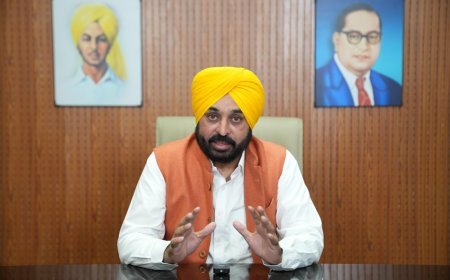
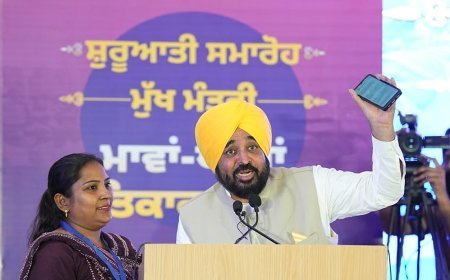
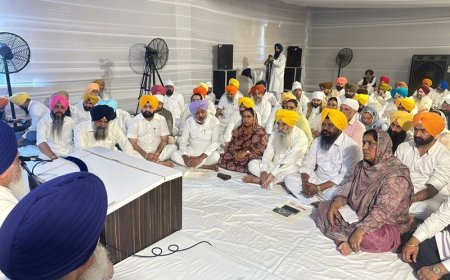
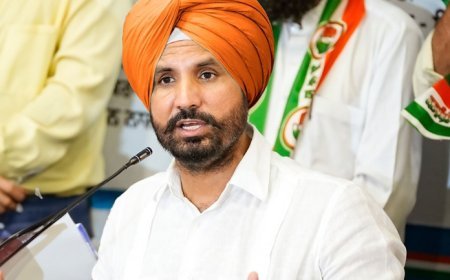
CHANDIGARH: Punjab Chief Minister Bhagwant Singh Mann on Wednesday presented a comprehensive four-year report card of the Rural Development and Panchayat Department as part of the Punjab Government’s ongoing “Shandaar Char Saal Bhagwant Mann de naal” series, highlighting how sustained policy interventions have transformed village infrastructure, strengthened grassroots governance, and expanded employment opportunities across rural Punjab.
Positioning rural development as a central pillar of inclusive growth, the Chief Minister outlined key initiatives ranging from the launch of Punjab’s first-ever caste socio-economic survey to large-scale infrastructure creation, revenue generation through transparent land management, and youth-focused development programmes.
Emphasising that the caste socio-economic survey, beginning April 1, will play a crucial role in ensuring equitable and targeted policymaking, the Chief Minister said the exercise aims to assess the living standards of all communities while maintaining complete confidentiality. He noted that the rural development report card is part of a wider governance framework under which the AAP government is presenting sector-wise performance across education, healthcare, irrigation, agriculture, and other key areas, underlining its focus on accountability, transparency, and measurable outcomes.
Presenting the report card of the Rural Development and Panchayat Department, Chief Minister Bhagwant Singh Mann said, “Holistic development of the villages has taken place in the last four years involving massive construction work, cleaning of ponds as the state has generated money by removing the illegal encroachments from the government lands and through other means.”
The Chief Minister said, “Due to strenuous efforts of the state there has been an increase in consensus for Panchayat Elections. There are 13,236 Panchayats in Punjab, the polls for which were conducted in 2024, with a large number of Panchayats elected unanimously. In 2018, around 1,870 Panchayats were elected unanimously but in 2024, as many as 2,970 Panchayats were elected unanimously.”
What's Your Reaction?
 Like
0
Like
0
 Dislike
0
Dislike
0
 Love
0
Love
0
 Funny
0
Funny
0
 Angry
0
Angry
0
 Sad
0
Sad
0
 Wow
0
Wow
0